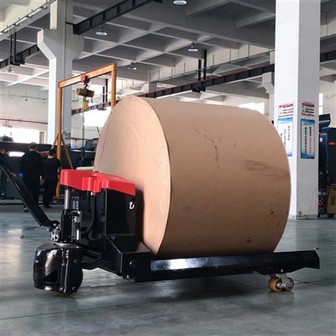
Why Thick Paper Requires Different Cutting Technology
Growing Demand for Thick Packaging Paper Is Reshaping Paper Converting
The global packaging industry is moving rapidly toward thicker and stronger paper materials. Folding carton factories, cigarette packaging manufacturers, food packaging suppliers, and luxury packaging converters are increasingly using 250–600 gsm white board paper, duplex board, kraft board, and coated packaging paper to improve structural strength and premium product appearance.
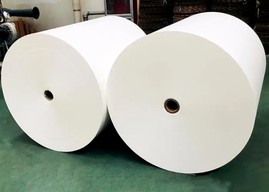
As paper grammage increases, paper converting difficulty also rises significantly. Many conventional paper sheeter machine systems that operate smoothly on 70–150 gsm printing paper begin showing clear limitations when processing heavy board materials at high speed.
In actual production, packaging factories commonly face problems such as edge bursting, fiber cracking, paper dust generation, unstable sheet squareness, cutting vibration marks, and poor stacking consistency during thick paper sheeting.
These defects directly affect downstream printing, foil stamping, laminating, die cutting, and carton forming performance. In severe cases, factories must slow down production speed or perform secondary trimming before printing, increasing both labor cost and material waste.
This is why more packaging manufacturers are recognizing that thick paper processing requires completely different cutting technology compared with standard paper sheeting applications.
Thick Paper Creates Completely Different Mechanical Challenges
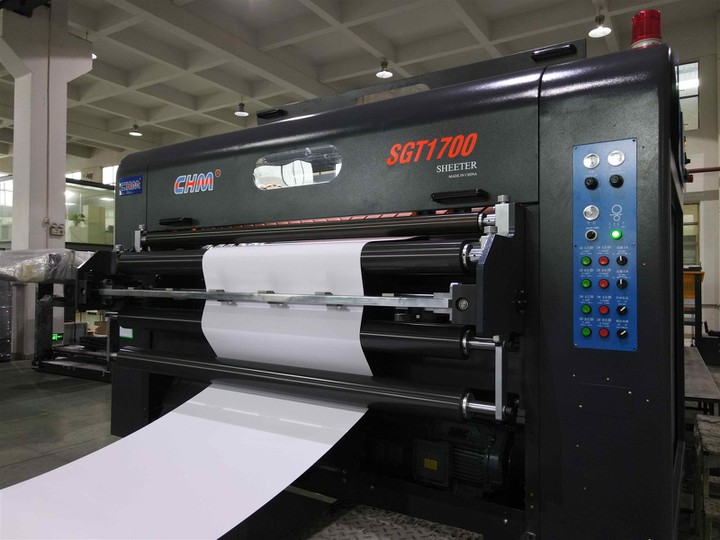
The main challenge in thick paper processing comes from the physical characteristics of the material itself.
Compared with lightweight printing paper, thick board materials have higher fiber density, stronger internal stiffness, and greater shear resistance during cutting. When processing paper above 300 gsm at speeds exceeding 200–300 m/min, the cutting system must withstand significantly higher mechanical load.
Under these conditions, traditional cutting structures often experience instability because the knife impact force becomes too large during high-speed operation.
In many conventional single cutting systems, the knife contacts the paper with relatively high instantaneous impact. When processing thick coated board, this impact can damage the paper fiber structure and create rough edges or edge cracking.
At the same time, insufficient machine rigidity may cause slight vibration or deformation inside the knife shaft and frame structure. Even micron-level movement becomes visible on thick paper surfaces during high-speed sheeting.
This is one reason why some factories processing 400 gsm duplex board reduce production speed from 300 m/min to below 180 m/min simply to maintain acceptable sheet quality.
However, reducing speed also lowers effective production capacity and increases manufacturing cost per ton.
Why Traditional Paper Sheeter Machine Systems Become Unstable
Many traditional paper sheeter machine systems were originally designed for commercial printing grades and medium-speed production environments.
When these machines process heavy packaging board continuously, three technical limitations become increasingly obvious.
The first problem is unstable cutting synchronization. If the rotary knife speed cannot precisely match paper transportation speed, relative impact occurs during cutting. This creates fiber tearing, edge cracking, and visible knife marks on coated board surfaces.
The second problem is insufficient structural rigidity. Thick paper generates much higher cutting resistance compared with lightweight paper. If the machine frame, knife holder, or transmission structure lacks rigidity, vibration may occur during continuous operation.
The third problem is unstable paper transportation. Thick board materials are more sensitive to tension fluctuation and feeding instability. Without accurate tension control and web guiding coordination, sheet squareness and stacking quality become inconsistent.
For modern packaging factories requiring stable high-speed production, these limitations directly affect profitability and downstream production efficiency.
Why Double Rotary Sheeter Technology Performs Better for Thick Paper
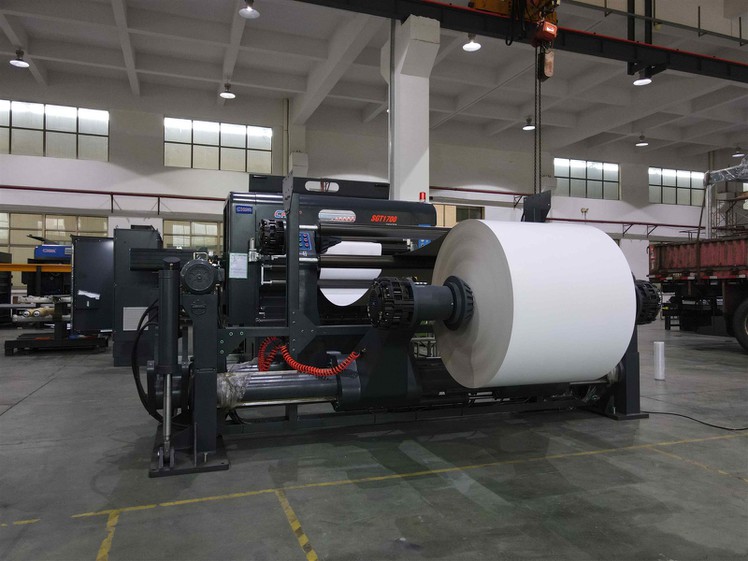
To solve these problems, thick paper converting requires a different cutting principle.
The CHM Machinery double rotary sheeter machine uses synchronized upper and lower rotary knife technology rather than conventional impact-style cutting structures.
During operation, the tangential speed of the rotary knives is synchronized with paper web speed within extremely small deviation. This significantly reduces relative impact force during cutting and helps preserve fiber integrity on thick coated board materials.
For example, when processing 300–600 gsm packaging board at speeds up to 250–300 m/min, the CHM double rotary sheeter machine can maintain cutting accuracy within ±0.5 mm while significantly reducing edge bursting and paper dust generation compared with conventional systems.
Because both rotary knives move continuously in synchronization, cutting force is distributed more evenly across the paper surface. This produces smoother paper edges, better sheet squareness, and more stable stacking quality during high-speed production.
For cigarette packaging paper, luxury packaging board, and coated carton materials, this cutting quality is especially important because the finished sheets can directly enter printing production without secondary trimming.
High Rigidity Structure and Intelligent Control Improve Stability
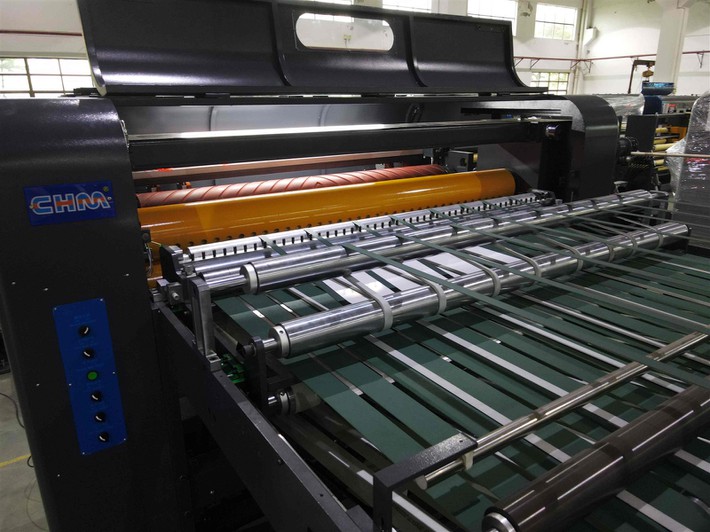
Thick paper processing requires more than just stronger cutting force. Stable system coordination is equally important.
CHM Machinery integrates high rigidity machine frames, precision knife shaft structures, servo synchronization systems, automatic tension control, and intelligent web guiding technology into modern paper sheeter machine solutions.
Servo synchronization technology continuously coordinates rotary knife motion with paper transportation speed. This allows the cutting system to maintain stable cutting accuracy even during acceleration, deceleration, and long continuous production runs.
Automatic tension control systems maintain balanced web tension throughout unwinding, feeding, and cutting processes. This helps prevent sheet deformation, wrinkles, and unstable feeding before the paper enters the rotary cutting section.
At the same time, intelligent web guiding systems continuously monitor paper position and automatically correct lateral deviation during production, helping improve sheet alignment and stacking consistency.
These technologies work together through the PLC control platform to maintain stable thick paper processing under demanding high-speed production conditions.
Thick Paper Cutting Quality Directly Affects Packaging Value
In modern packaging manufacturing, cutting quality is no longer only a converting issue. It directly affects final product value.
Rough edges, unstable dimensions, and fiber cracking may reduce printing registration accuracy, affect foil stamping precision, and create feeding instability during die cutting and carton forming.
For premium packaging applications, poor sheet quality can also reduce packaging appearance and increase downstream rejection rates.
As a result, more packaging factories are investing in specialized paper sheeter machine technology designed specifically for heavy paper converting applications.
CHM Machinery double rotary sheeter machine solutions are widely used for duplex board, white board paper, kraft board, cigarette packaging paper, food packaging paper, and coated carton materials requiring stable high-speed cutting performance.
For factories upgrading toward higher automation and premium packaging production, stable thick paper sheeting is becoming an increasingly important competitive advantage.
Stable Thick Paper Processing Is Becoming an Industry Standard
The global packaging industry continues moving toward higher precision, cleaner production, and more automated manufacturing systems.
As packaging quality standards continue increasing worldwide, paper converting factories are placing greater focus on cutting stability, material protection, and long-term production reliability during thick paper processing.
CHM Machinery continues developing advanced paper sheeter machine technology for demanding packaging and printing industries, helping factories improve production efficiency while maintaining stable cutting quality for heavy board materials.
Today, thick paper processing capability is no longer simply a machine specification. It has become an important indicator of modern packaging production competitiveness.
How to contact with us
Email: chm007@szchm.com
Wechat/Phone/WhatsApp:+8617371066702
Follow me on Social Media
Facebook: https://www.facebook.com/facebookCHMCassie/
Instagram: https://www.instagram.com/chm_sheeter_cassie/
LinkedIn: www.linkedin.com/in/chm-cassie-she-6b6200302
Youtube:www.youtube.com/@CassieShe